Ms. Michele Minter
Vice Provost for Institutional Equity and Diversity Princeton University
Princeton, New Jersey 08544
Vice Provost for Institutional Equity and Diversity Princeton University
Princeton, New Jersey 08544
Dear Ms. Minter,
Thank you so much for meeting recently with Mark, my co-founder and business partner. As discussed, the Mask Consortium, LLC. (MASK) consults with artists, institutions, governing bodies, non-governmental organizations, not-for-profits, and educational institutions who are interested in leveraging technology to preserve, protect and distribute artistic, cultural or historic content. We provide a variety of technology & cultural expertise which can help Princeton University with initiatives that are in the pipeline. Whereas we are currently working with The Princeton University Art Museum (PUAM) to digitally preserve the exhibitions at the Bainbridge and Hulfish Galleries, after learning about your office’s purview and goals, we developed the following proposal so that Princeton University can know about other potential opportunities to leverage MASK Consortium’s capabilities.
Regards,
Alicia Hines ‘95 Founder & CEO MASK
CLIENT DESCRIPTION
Princeton University Office of Institutional Equity & Diversity (The Office)
Princeton’s institutional equity and diversity efforts are designed to promote equal opportunity and campus diversity. The vice provost and her staff lead initiatives to fulfill the University’s commitment to diversity, inclusion and fair treatment of all members of the Princeton community, and to monitor compliance with university policies and federal, state and local laws concerning nondiscrimination, equal opportunity and affirmative action.
OUR BACKGROUND
Many institutions of higher learning are under pressure to become egalitarian, multiracial & pluralistic; in staffing, administration, collecting and exhibiting. At the same time, there has also been a backlash from many segments of society against change. Our team can provide a unique perspective from underrepresented demographics as to how to collect, display, interpret, and discuss objects outside of an institution’s traditional lens. We facilitate and stimulate fluid, dynamic, and relevant learning through multidisciplinary inquiry, dialogue, critical thinking and collaborative processes. Additionally:
- We are Black & Women owned, run, and staffed.
- We maintain technically superior tools, workflows & deliver an exceptional product.
- Our extensive relationship network provides access to exclusive talent.
- We provide NexUS art & technology skills training for underserved communities.
- We have a proven track record with known institutions.
“Objects are powerful vehicles for grappling with emotional and divisive issues that often cannot be discussed productively in any other way. If museums are to be relevant, we must provide ways into these conversations, grounded in our objects and centering inclusivity, and empathy in all that we do. By partnering with Sanford Biggers and MASK consortium, we have radically expanded the methods of interpretation. We have done this collectively by putting aside longstanding assumptions about how to display and interpret objects, grounding our work in deep research and analysis, utilizing new technologies and inviting artists of all stripes to respond from their own areas of expertise." - Amy Gilman, the Director of the Chazen Museum of Art at the University of Wisconsin:
OPPORTUNITIES
Opportunity #1 - History and Sense of Place website
The Office currently has a website that focuses on inclusivity at Princeton: https://inclusive.princeton.edu
One of the pages on this website is called “History and Sense of Place” which is located at: https://inclusive.princeton.edu/initiatives/key-initiatives/history-and-sense-of-place
One suggestion is to create a more dynamic archive space for this content by developing a suite of immersive, interactive assets that can excite an expanded population to leverage the resources of the Office.
One of the pages on this website is called “History and Sense of Place” which is located at: https://inclusive.princeton.edu/initiatives/key-initiatives/history-and-sense-of-place
One suggestion is to create a more dynamic archive space for this content by developing a suite of immersive, interactive assets that can excite an expanded population to leverage the resources of the Office.
Opportunity #2 – Walking Tours
The Office currently offers walking tours around campus with a desire to reach and teach potential students, the current campus community, alumni, and tourists with guided experiences.
One suggestion is to layer in-person tours with virtual experiences that achieve the following:
- Engage a diverse population’s multiple interests.
- Educate visitors with the full range of knowledge that the University has to offer.
- Demonstrate the University’s leadership in the application of technology.
- Examples include:
- Princeton University Chapel – linkages to Civil Rights activism at the Chapel
- Firestone Library - Betsey Stockton Garden & connections to the Princeton Slavery Project
- East Pyne – knowledge about the James Collin Johnson Arch
Opportunity #3 – Development of Historical Markers
Over the past 7 years, the Office has collaborated with University researchers, professors and students to reckon with Princeton’s role in colonial disenfranchisement of indigenous and enslaved peoples. The current and upcoming historical markers can be seen as just the beginning of telling the stories behind the people they prompt visitors to remember. By collaborating with MASK on artist responses and the engagement of university learning resources through technology, the Office can expand on the utility of the footprint that planned current and future markers provide.Opportunity #4 – Portrait & Public Art Commissions
The Office plays an integral role in the curation of artworks that create a vibrant, engaging, and inclusive campus environment. MASK provides intimate access to established and breaking artists from populations that have been traditionally underrepresented in the University’s Putnam Collection. MASK can help leverage these relationships to produce the more inclusive and vibrant campus environment desired by the Office.
Opportunity #5 – John Witherspoon Statue Strategy
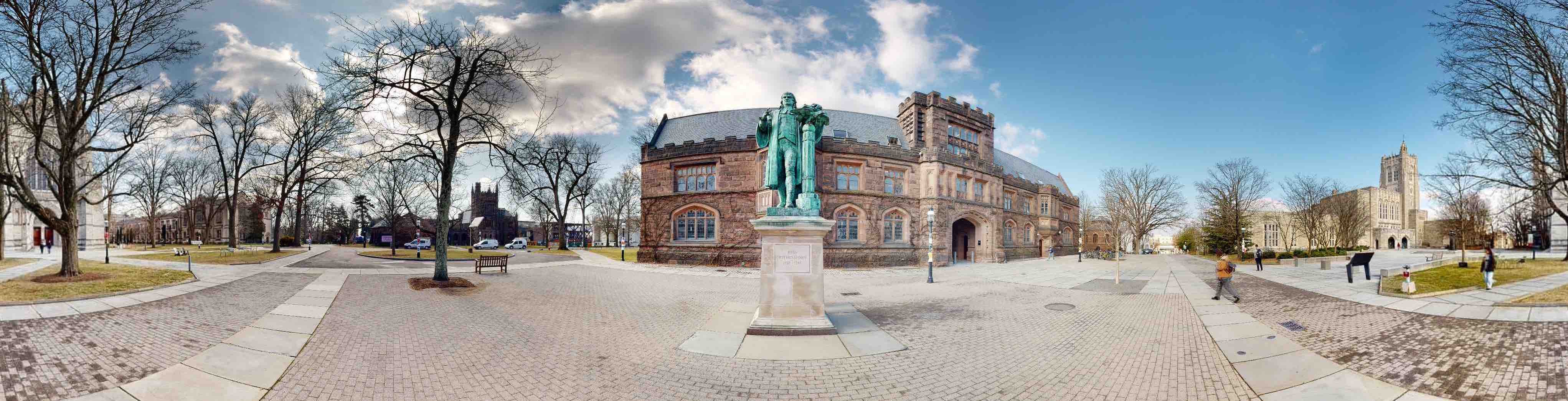
The Office is involved in the University's Committee on Naming to review a proposal to remove or replace a campus statue of John Witherspoon, an influential figure in the American Revolution who owned enslaved people during his time as Princeton's president. MASK envisions a suite of programming studying the object more deeply to foster generative dialogue amongst the Princeton community and stakeholders, to inform and expand the positive potentialities of grappling with its complicated history.
NEXT STEPS
If the Office believes that any of the opportunities outlined above are worth pursuing, please let me know and MASK can provide more detailed proposals, which include timelines and budgets.
APPENDIX A
Case Study – The Chazen Museum of Art at the University of Wisconsin-Madison
In 2020, a bronze statue called the “Emancipation Group” by Thomas Ball draws national attention and headlines amidst the confederate statue reckoning that wracks America after the murder of George Floyd. The Boston Art Commission votes to remove the work from public view amongst criticism and fears of it being toppled. It does so swiftly, with little fanfare, and with no clear plan for future exhibitions. The Chazen Museum of Art at the University of Wisconsin-Madison realizes that it also has a white Italian marble version of the “Emancipation Group” and seriously considers removing the work from public view.
The university engages MASK to assist with the evaluation and deep study of the object. Below are some of the accomplishments from the multi-year collaboration:
- Cross-disciplinary collaboration at the university
- Practical application of engineering to art and social justice (STEAM)
- Art & artifact representation adjustments in the art museum database based on research
Curricular change - Observed increase in the cultural sensitivity of museum security detail
- Fostered artistic and academic exchange between local communities of color and the university
- A hybrid exhibition, part pedagogical, part contemporary comprised of artworks, and responses from the impacted community fosters dialogue and healing
- Other universities with editions of the controversial object in their possession have expressed interest in receiving the touring exhibition and developing responses unique to their community
- Comprehensive curriculum is being developed with support from the Mellon foundation, and advisory guidance from the MonumentLabs projects
PRESS
- FORBES: Sanford Biggers Leads Re:mancipation Project At Chazen Art Museum In Madison, Wisconsin
- AMERICAN ALLIANCE OF MUSEUMS: Trusting the Process: The Collaborative Journey to Reframing a Problematic Object
- Wisconsin State Journal: Creating Space To Talk